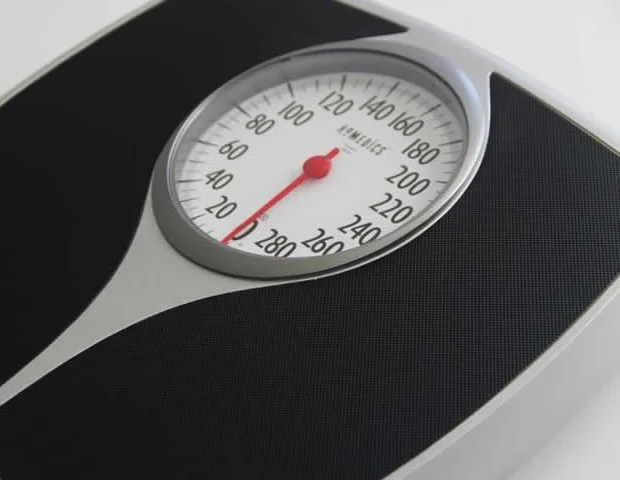
Researchers at the University of Virginia School of Medicine have received $3.4 million from the National Institutes of Health to increase the availability of weight management programs that offer helpful personalized feedback.
Rebecca Krukowski, Ph.D., and her colleagues aim to support people in weight management programs that track or “self-monitor” their diet, exercise and weight. The researchers will develop a semi-automated feedback system to find the “sweet spot” of combining automated feedback with human expertise and support to help participants stay on track.
The study will be co-led by Kathryn M. Ross, PhD, MPH, a professor at Wake Forest University School of Medicine and a senior research scientist at the Advocate Aurora Research Institute. The research team includes University of Florida computer science experts Jim Ruiz, PhD, and Lisa Anthony, PhD, as well as biostatistics expert Peihua Qiu, PhD.
Personal feedback can be motivating during weight loss, but it also takes time for clinicians, community-based weight program facilitators, and other professionals. This means that this feedback does not occur often. Krukowski is excited to see how her hybrid approach will improve the availability of this important ingredient, especially for people living in rural areas.
If you think about homework when you’re in school, we all know what happens if the teacher doesn’t provide any grade or feedback on the assignment – we’ve all stopped doing homework because we haven’t received praise or feedback on how we can improve our work and we don’t feel accountable for the homework. Self-monitoring feedback is similar—it provides positive reinforcement and accountability for continuing diet, exercise, and weight-tracking efforts, as well as personalized suggestions for reaching your goals.
Rebecca Krukowski, PhD, UVA Department of Public Health Sciences
More effective weight management
Researchers note that adherence to diet, exercise, and weight is one of the strongest predictors of weight loss success. But chasing it all, day in and day out, can be a grind, and many people struggle to stay motivated. Personal feedback can help motivate people to stick with these important lifestyle changes.
However, writing personal messages is hard work and requires good training. That takes about 26 minutes of professional time per person per week, Krukowski says. Many clinical and community programs simply do not have the resources to do this, reducing program effectiveness and leaving participants on their own, without this important component.
Krukowski and her colleagues aim to change that. In the first phase of their research, scientists will provide written feedback from trained professionals over 16 weeks of weight loss. Participants will receive an electronic scale, activity monitor and diet tracking app to self-monitor their behaviors, and they will receive weekly feedback messages.
Over the next two years, the study is enrolling 300 people across the country so that researchers can see how different types and lengths of exposure affect tracking behavior and weight loss. They will also look at variables such as age, gender and how quickly participants lose weight, to see how the feedback should be more personalized into a precision medicine approach.
The researchers will use these findings to inform the second phase of their research, the development and refinement of a semi-automated feedback system. Once complete, the system will be tested with another 50 participants.
If successful, the research project could facilitate more effective weight management programs and make them available to more people, including potentially programs for people who have had metabolic/bariatric surgery or are taking obesity medications.
“Providing personalized self-monitoring feedback can double the amount of weight loss achieved in behavioral weight loss programs,” said Krukowski, co-director of the UVA Community Center for Cancer Control and Obesity Research and a member of the UVA Comprehensive Cancer Center. “Creating a tool that makes it easy and quick to provide personalized self-monitoring feedback allows any obesity treatment program to include this important element.”
People interested in learning more can email the study coordinator [email protected].
Finding new ways to improve the health of people in Virginia and around the world is the major mission of UVA’s new Paul and Diane Manning Institute for Biotechnology. UVA has also launched a nationwide clinical trial network that expands access to potential new treatments as they are developed and tested.
About help and study
A five-year, $3.4 million grant, number R01DK140099, was provided by the NIH’s National Institute of Diabetes and Digestive and Kidney Diseases.
Source:
University of Virginia Health System
#UVA #researcher #receives #million #grant #improve #weight #management #programs