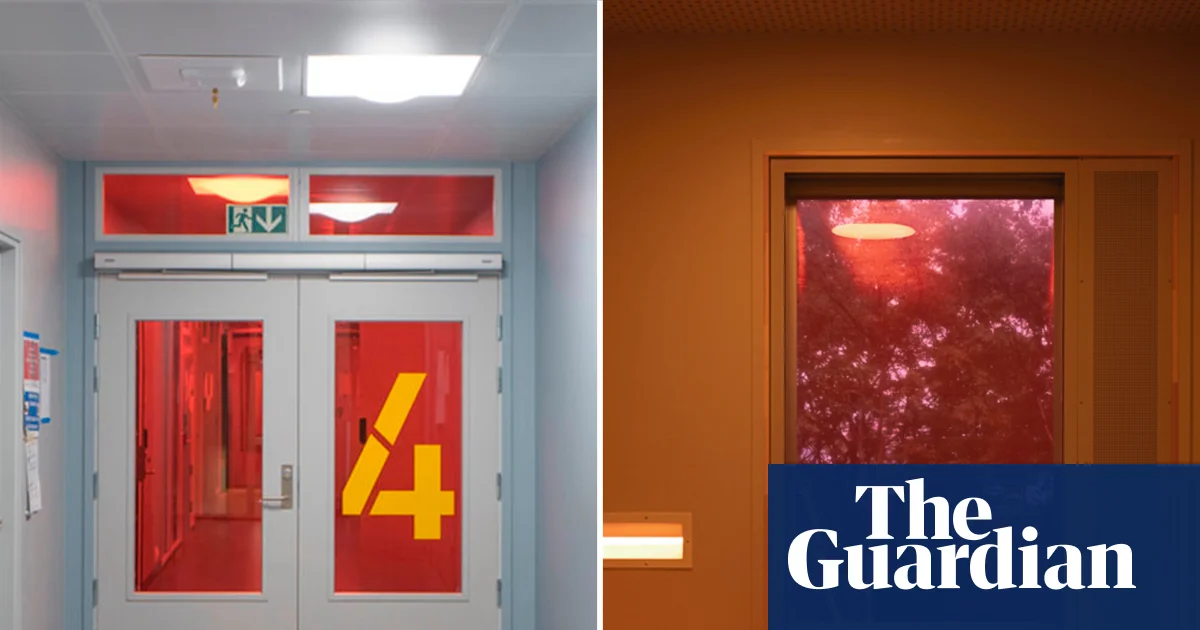
AAt first glance, the psychiatric ward in Trondheim looks like any other unit that cares for patients with severe mental disorders. But as dusk falls, the filters drop from the windows, and the lights shift to a soft amber glow. By removing the blue waves that interfere with the body’s internal clock, doctors are testing an unusual idea here: the design of the ward itself can be a form of therapy.
Light is the main signal that regulates the body’s circadian rhythm—the roughly 24-hour biological clock that governs sleep and many other bodily processes. Increasing evidence links circadian disruption to conditions including depression, heart disease and dementia, and sleep-wake disturbances are a long-recognized feature of psychiatric illness, particularly bipolar disorder.
“Increasingly, both anecdotal and empirical evidence suggests that bipolar people are more sensitive to light, which is not beneficial for them in terms of manic relapses with seasonal changes and longer days in spring,” said Professor Daniel Smith, a psychiatrist at the University of Edinburgh, who was head of the UKK Health Network and non-leader of the Manic Network.
“The general idea is that evening light exposure in particular delays the phase of the clock, suppresses melatonin, and so people go to sleep later and maybe don’t sleep at all,” he said. Poor sleep can destabilize daily patterns of rest and activity, which can trigger mood episodes in vulnerable individuals.
Because of this, there is a growing interest in using light to stabilize people’s body rhythms and, as a result, improve their symptoms – although relatively few large clinical studies have tested this idea.
When doctors at Tandem began planning a new psychiatric unit, it presented a rare opportunity to test the idea in practice. The team installed a dynamic lighting system and automatic blinds designed to remove blue waves from the ward in the evening.
“Many patients with severe mental illness have circadian disturbances, and we wanted to see if we could do something about it by changing the light system,” said researcher and consultant psychologist Howard Kallistad of St. Olas Hospital and the Norwegian University of Science and Technology.
The unit was divided into two identical sections with the same layout, staff and facilities. The only difference was the evening light environment. In one ward, the lighting is changed from 6pm to remove blue wavelengths – the kind the circadian system is most sensitive to – while blinds and filters block similar light from windows and screens. In another, patients experience standard hospital lighting.
A previous study showed that healthy volunteers who stayed on the ward experienced changes in melatonin secretion, sleep patterns and alertness.
The team has now tested the approach in 476 patients admitted to short-term psychiatric intensive care with conditions including psychosis, mania, severe depression and suicidal thoughts. Half were assigned to a ward with blue-reduced lighting and half to standard lighting.
The study, presented at a recent meeting of the International Association for Bipolar Disorders and published in PLOS Medicine, found that although the overall length of stay was the same — typically three or four days — patients treated in a circadian-adapted ward showed greater clinical improvement and less aggressive behavior.
Kalstad said: “We found that there was an additional gain from being in this blue light environment in terms of how many patients were in a milder disease state at discharge, and the level of improvement that patients had during their admission.
“Just by changing the light spectrum, we can improve the quality of treatment, and we’ve seen that especially in aggressive behavior.”
Violence and agitation are common challenges in acute psychiatric wards, where studies suggest that there are between 8% and 76% of cases of aggressive behavior, creating risks for both patients and staff.
“I think just finding aggression is really important, because it makes it a little bit easier to protect these people,” Smith said.
Professor Dirk John Dick, a sleep and circadian rhythm researcher at the University of Surrey, who was not involved in the study, said one of the interesting aspects of it was that the intervention was designed on the ward itself. “The burden on participants is essentially zero—they don’t have to sit in front of a light box or wear blue-blocked glasses.”
Such approaches can be scaled up by designing indoor environments that better match human biology, he added. “They confirm that the effects of light on the brain are not limited to the biological clock or sleep, they also affect mood and intelligence.”
Researchers are also exploring whether circadian rhythms can benefit people beyond psychiatric wards. The UK’s National Institute for Health and Care Research has launched an appeal for funding to test whether it can help care home residents to “reset” the internal clocks and reduce behavioral disturbances in dementia.
NIHR Health Technology Assessment Program Director Professor Anthony Gordon said: “This is about finding out if we can provide a cost-effective, drug-free way to reduce anxiety, improve sleep and improve quality of life in residential care across the country.
Professor Colleen McClung, a University of Pittsburgh neuroscientist who last month published a review on circadian rhythms in psychiatric disorders, said that such behavior may become increasingly personalized: “For example, if someone has circadian rhythms that are delayed, morning light therapy will move someone forward. Afternoon or evening therapy may be helpful.
Wearable devices that track sleep and activity patterns could help identify these individual differences and guide treatment, she said.
#blue #color #light #treat #mental #illnesses